Bedford Housing Styles And What They Mean
July 23, 2026
July 23, 2026
If you are house hunting in Bedford, the style of the home tells you more than just how it looks from the street. In this market, architecture often signals how a home lives, how much updating it may need, and how the land around it can shape value. If you want to read Bedford inventory more strategically, this guide will help you understand what the area’s main housing styles usually mean in practice. Let’s dive in.
Bedford has an older and historically layered housing stock, with homes ranging from colonial-era farmhouses to post-World War II modern residences. The town’s draft comprehensive plan says nearly a quarter of Bedford homes were built before 1940, while only about 3% were built since 2010.
That matters because in Bedford, square footage is only part of the story. Architecture, lot size, site planning, and update level often carry just as much weight when you are evaluating a property.
Bedford is also a largely owner-occupied market. Census QuickFacts reports an owner-occupied housing unit rate of 80.3% and a median owner-occupied home value of $938,800.
The town draft plan estimates about 6,282 homes in Bedford, with about 25% renter occupancy and an 11% vacancy rate. It also notes that higher-density residential areas are concentrated near hamlet centers, while density drops outside those core areas.
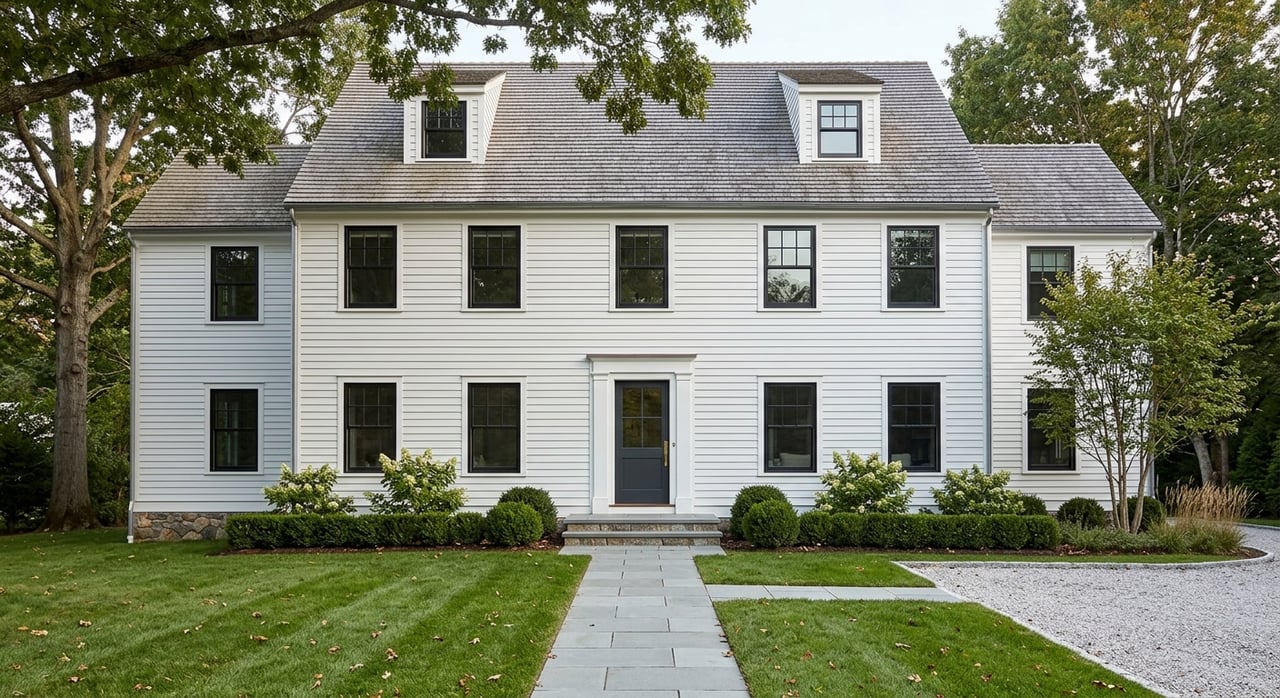
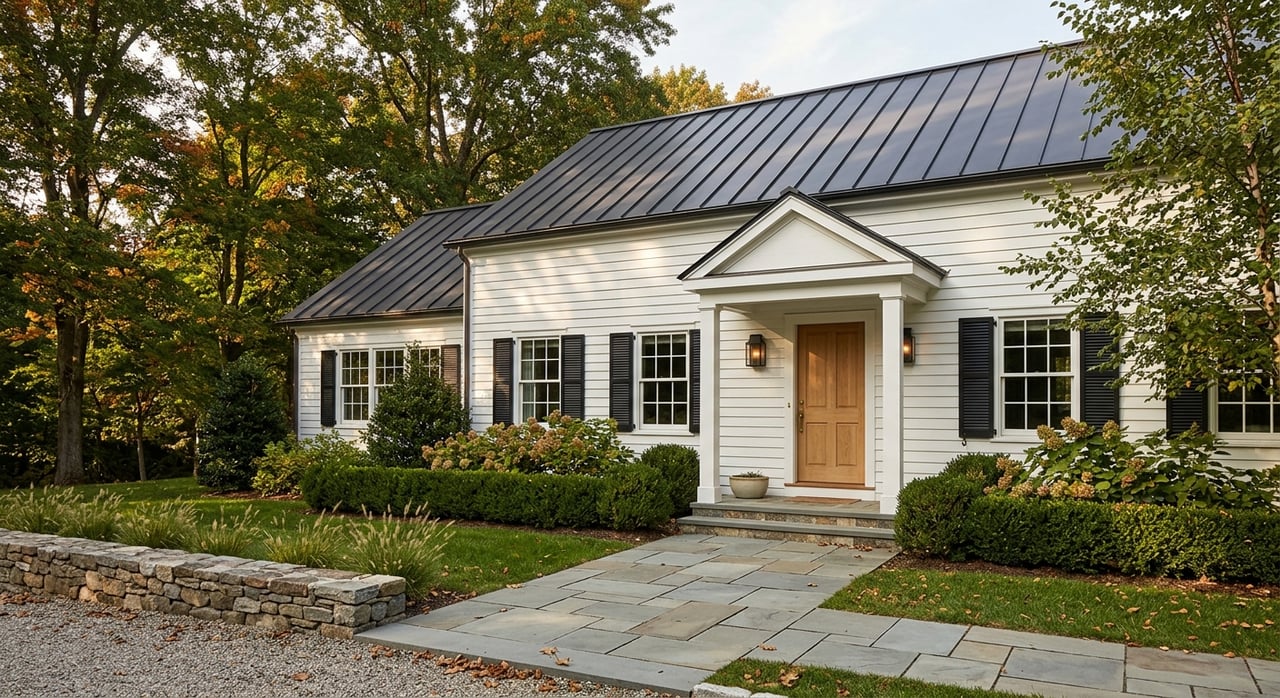
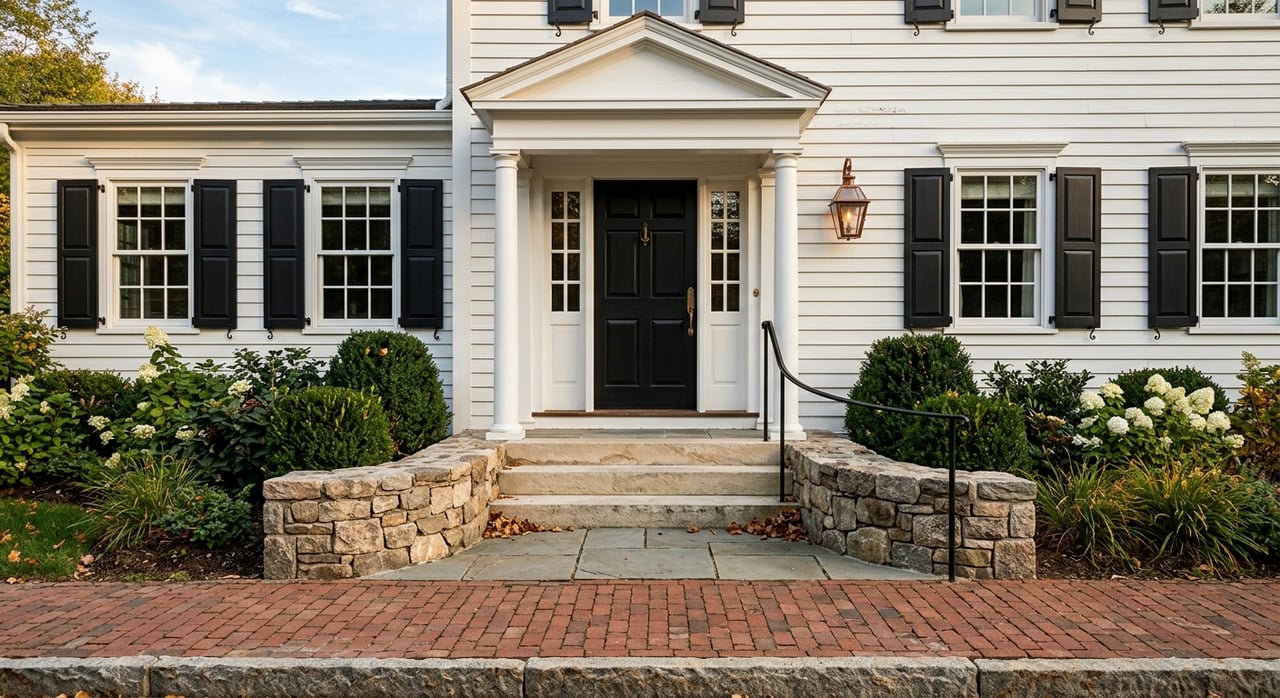
In Bedford, the broad colonial label often includes Georgian, Adam/Federal, Greek Revival, and Colonial Revival homes. According to the town’s architectural survey, these homes are generally formal and symmetrical, with centered entries, divided-light windows, side-gable or gambrel roofs, and rectangular or boxlike plans.
Colonial Revival is especially common in Bedford. The town also notes that many properties in the Bedford Village Historic District reflect the Colonial style.
When you tour a Bedford colonial, you will often find a more formal layout than you might see in a newer home. Rooms may feel more defined, and the flow can be less open than a contemporary plan.
Value in these homes is often tied to proportion, character, and the quality of any updates. Homes that retain strong exterior balance and original details while incorporating thoughtful improvements tend to stand out.
With colonials, it helps to look past the style name and focus on how the home functions for your daily life. Pay attention to room placement, ceiling height, natural light, and whether updates feel consistent with the home’s architecture.
In Bedford, two colonials with similar square footage can present very differently based on lot setting, layout, and update quality. That is one reason style should always be read together with the property as a whole.
Bedford’s historic survey says vernacular structures were often farmhouses or modest buildings built from the 18th century through the early 20th century. The survey identifies forms such as gable-front, hall-and-parlor, I-house, and massed side-gable plans.
The town’s preservation materials also reference early barns and vernacular agrarian outbuildings. Together, these details reinforce the agricultural roots behind this part of Bedford’s housing stock.
In practical terms, Bedford farmhouses often suggest simpler forms, older construction, and a closer relationship to the land. These homes may feel especially tied to their site, whether that means open yard area, mature landscaping, or older outbuildings.
They can also come with more variation from one property to the next. Original condition, prior additions, and the level of systems updates can differ widely, even among homes that look similar at first glance.
If you are considering a farmhouse or other vernacular home, it helps to think in layers. You are not just buying square footage. You are also evaluating the age of the home, the quality of previous improvements, and how well the property supports the way you want to live.
In Bedford, that can make these homes very appealing, but it also makes strategic review important. A strong setting and good updates can meaningfully influence long-term value and resale appeal.
Bedford’s architectural survey places Modern and Mid-Century Modern homes in the post-World War II period. It describes the International style as focused on stark simplicity, flexible planning, and minimal ornament.
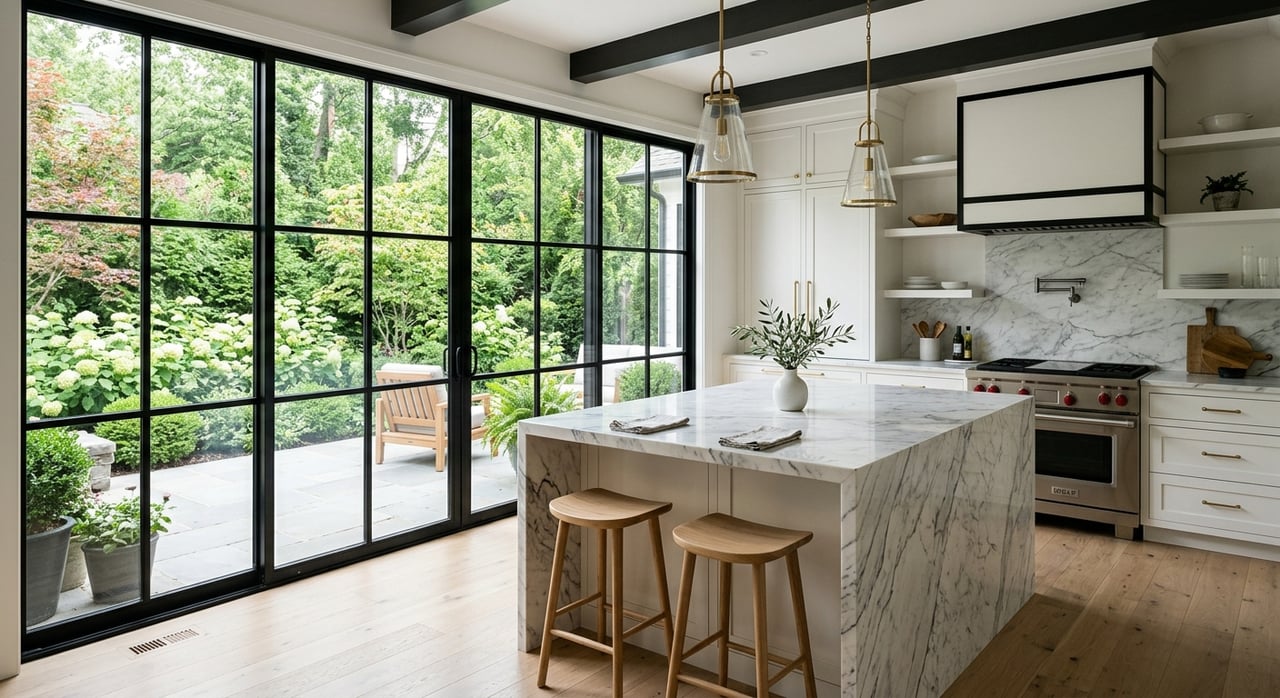
These homes often feel very different from Bedford’s older colonials and farmhouses. Instead of formal symmetry and historic detailing, the emphasis is usually on clean lines, openness, and a stronger connection to the surrounding landscape.
If you prefer a less formal house, this category may be especially appealing. Bedford contemporaries often read as lighter, more open, and more adaptable to modern living patterns.
For many buyers, that means easier entertaining, more visual flow, and spaces that feel less segmented. In a market with so much older housing stock, that can be a meaningful point of difference.
Modern homes are generally less tied to historic detailing than older styles. Still, if a property is located within a historic district, review considerations may still apply.
That is why context matters. Even a home with a more current feel should be evaluated through the lens of location, lot, and any applicable local review process.
Newer builds are a small part of the Bedford housing mix. The town’s draft comprehensive plan says only about 3% of Bedford homes were built since 2010.
That limited supply is part of what makes newer homes feel distinct in this market. They are not the default product type, and they often show up in specific land-use settings rather than in conventional dense suburban patterns.
Bedford’s zoning table shows a wide range of residential lot minimums. These include 4 acres in R-4A, 2 acres in R-2A, 40,000 square feet in R-1A, 20,000 square feet in R-1/2A, and 10,000 square feet in R-1/4A.
The town also allows conservation development on large tracts in residential districts, with the stated goal of preserving natural and scenic qualities while permitting clustered development. In practice, that means newer homes may be more likely to appear on substantial lots or in carefully planned subdivision settings.
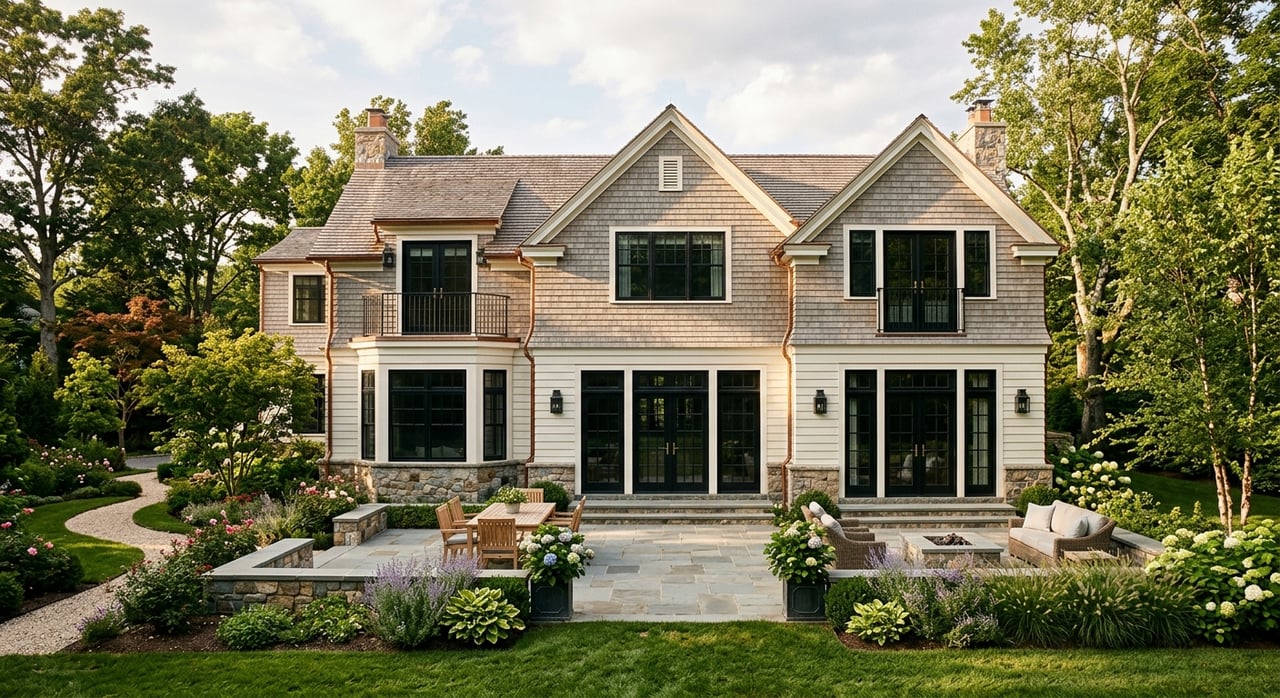
A newer Bedford home may offer a more current floor plan and newer systems, but the site still matters. Lot configuration, privacy, topography, and usable outdoor space can all influence how a home feels and how it performs in the market.
That is especially true in a low-density town like Bedford, where the land around the home is often part of the value story.
In Bedford, lot size and site planning are major value drivers. The Planning Department states that subdivision regulations govern how new lots are created, merged, or reapportioned, while zoning sets the land-use and dimensional requirements by district.
The town’s draft plan also says higher-density residential areas are concentrated near hamlet centers and that density decreases substantially beyond those cores. This pattern helps explain why Bedford feels different from more compact suburban markets.
Two similarly sized homes can live very differently depending on the parcel. One may sit on a broad, estate-like property with privacy and usable open space, while another may sit on a smaller lot closer to a hamlet center.
That does not make one automatically better than the other. It means the land is part of the decision, and your priorities should guide how you evaluate it.
When comparing Bedford homes, pay close attention to:
These details can shape everyday enjoyment and market value just as much as the architecture itself.
Bedford has two nationally recognized historic districts, and the town says its Historic Building Preservation Commission oversees certain historic properties outside those districts. Within the Bedford Village Historic District, the Review Commission regulates new construction and the reconstruction, alteration, and demolition of existing buildings.
The town also says that outbuildings, walls, fences, steps, mailboxes, signs, paint colors, and exterior changes are reviewed and approved there. For buyers, that means historic character can come with additional process.
Older colonials and farmhouses can carry strong character appeal, but they may also come with more approvals and a wider range of update quality. If you are considering one, it helps to review not just what has been renovated, but how those renovations were handled.
In Bedford, the style label alone rarely tells the whole story. A home’s long-term appeal often comes from the combination of architectural character, lot quality, functional layout, and modernized systems.
When you look at Bedford inventory, try to evaluate each home through four lenses:
That framework can help you compare very different properties more clearly and make decisions with more confidence.
If you are weighing Bedford housing styles and want a clear strategy around value, updates, and fit, The E & F Team - Main Site can help you navigate the market with precision and perspective.
Stay up to date on the latest real estate trends.
Whether you’re buying, selling, investing, or simply exploring the market, having a trusted local team matters. The E&F Team provides strategic guidance and market expertise to support you every step of the way. Contact us to learn more about our services, request a home valuation, or gain insight into today’s market.
The E & F Team
Looking to buy, sell or learn more about the market? Reach out today to start a conversation.
Jessica Feuerstein
(301) 257-8624
[email protected]
Elina Edelman
(917) 364-6151
[email protected]