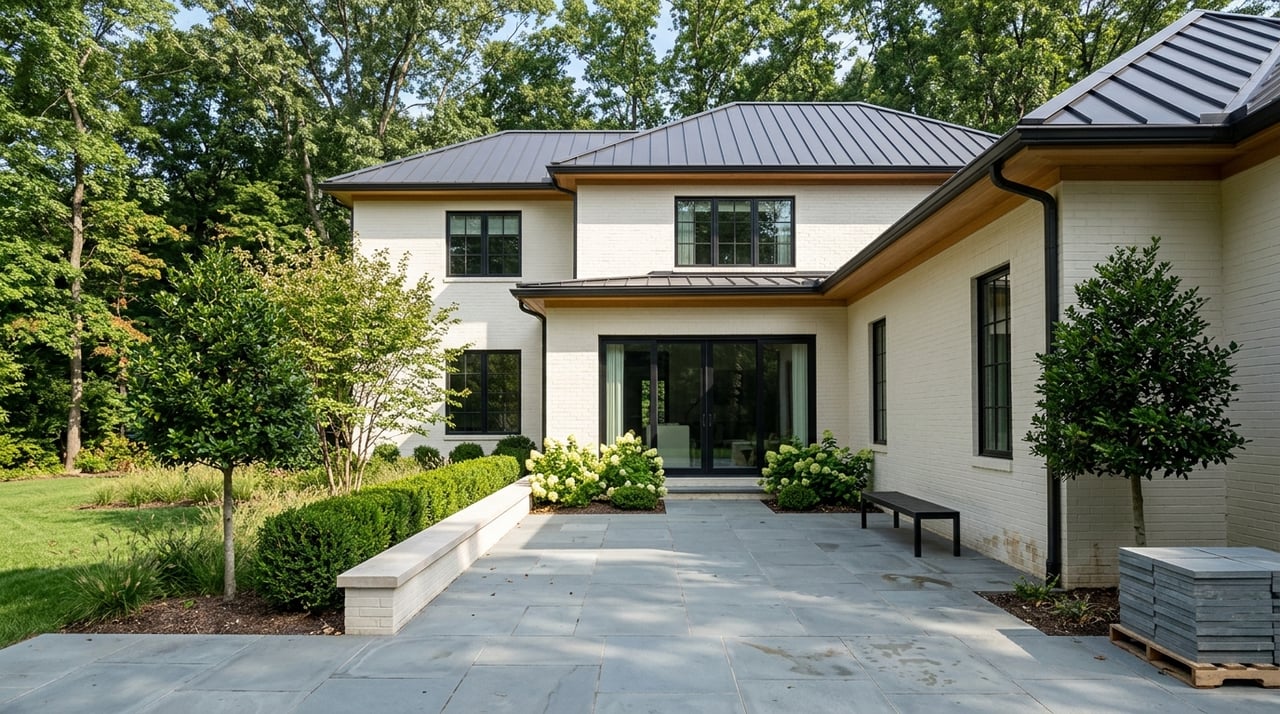
Bedford NY New Construction Homes and Land Guide
April 23, 2026
April 23, 2026
If you are thinking about buying land or pursuing new construction in Bedford, it is easy to focus on acreage, price, and design ideas first. In reality, the bigger question is often whether a property can support what you want to build under Bedford’s rules and review process. With the right strategy, you can move forward with more clarity, protect your investment, and avoid expensive surprises. Let’s dive in.
Bedford is not a market where every vacant parcel should be viewed the same way. The town spans about 39.3 square miles, includes Bedford Village, Bedford Hills, and Katonah, and places a strong emphasis on historic preservation and environmental stewardship, which directly shapes land use and development decisions. You can learn more about the town through the Town of Bedford overview.
That matters even more in an active market. Recent reporting showed a median sale price of $915,000 in Bedford in March 2026, and Realtor.com identified Bedford as a seller’s market in February 2026. In a competitive environment, buyers need to move decisively, but land and new construction still require careful due diligence.
In Bedford, a parcel’s value is tied to feasibility as much as size. The town’s Planning Department oversees a framework that can involve zoning, subdivision review, wetlands review, steep-slopes review, tree removal rules, and historic approvals.
That means a five-acre parcel is not automatically easier to build on than a smaller lot. Buildability often depends on the usable envelope after setbacks, environmental constraints, access, and utility planning are taken into account.
Bedford’s residential zoning districts range from R-4A, which requires 4 acres minimum lot area, to R-1/4A, which requires 10,000 square feet minimum lot area. Minimum front setbacks also vary, with some districts requiring 35 feet and others up to 75 feet. You can review the town’s residential bulk regulations table to see how quickly the buildable area can change from one parcel to another.
Even when a lot is legally conforming, the actual placement of the home, driveway, septic area, and other site improvements may be more limited than expected. This is one of the first places where buyers benefit from a disciplined, property-specific review.
A survey or site plan is not just paperwork in Bedford. The town’s building permit application requires septic location, setback dimensions, and calculations for building and impervious-surface coverage.
The same application also asks whether the property is in a historic district, located in a wetland, or abuts a state or county road or park. In some cases, an as-built survey may also be required after the foundation is installed to verify setbacks. For buyers, that makes the survey one of the core documents for evaluating whether a parcel fits your plan.
In Bedford, environmental constraints can have a major impact on cost, timeline, and layout. A lot may look promising on paper but become far more complex once wetlands, slopes, and tree regulations are considered.
The town requires a permit for regulated activity in wetlands or wetland buffers. According to the Wetlands Control Commission, this can include construction, excavation, vegetation removal, driveways, pools, tennis courts, septic fields, and cut-and-fill work.
That means wetlands review is not limited to large-scale development. Even a single-family home project may trigger review depending on the site conditions.
Bedford also has a steep-slopes permit process for projects that disturb slopes greater than 25 percent. In addition, the town’s tree ordinance can trigger permit requirements depending on how many trees are removed relative to parcel size, as outlined by the Wetlands Control Commission and related land-use rules.
For buyers, these constraints are important because they can affect driveway placement, grading plans, septic design, and the overall footprint of the house. A property that seems simple at first glance may require more engineering and approvals than expected.
Utility access is one of the most practical parts of Bedford land due diligence. If public water is not available, Westchester County states that each lot must have its own drilled well, and private wells must be tested upon sale, for leased property, and before water from a new well is used. These standards are outlined in the county’s residential well and onsite wastewater rules.
Septic design is just as important. The same county rules use a design flow of 110 gallons per bedroom per day for new homes, which can directly affect what size home a site can support. For land buyers, well and septic feasibility should be part of the conversation from the beginning, not after contract.
Bedford’s approval process can involve more than one board or department. If you are buying land for a custom home or evaluating a subdivision opportunity, it helps to understand who reviews what.
The Bedford Planning Board handles site plans, subdivisions, and special use permits. Subdivision applications require digital and hard-copy submissions, and may require a SEQRA Short Form Environmental Assessment Form.
Preliminary subdivision applications also require a public hearing and mailed notice to nearby owners within 500 feet. For buyers looking at larger parcels or development potential, this is an important timeline and process consideration.
Historic review is another factor that can materially shape a project. In Bedford Village, a Certificate of Approval is required before applying for a town building permit when a project alters the site or exterior facade within the district, according to the town’s historic district review guidance.
That review can apply to new construction, additions, exterior materials, windows, doors, paint color, landscape changes, lighting, signage, and walls or fences. Katonah also has district review for major exterior changes, though roofs and paint colors are exempt there. Some historic properties outside local districts may still fall under preservation oversight as well.
In a market like Bedford, builder selection is not just about style and budget. It is also about process, licensing, documentation, and local readiness.
The town’s Building Department requires permits for a wide range of residential work, including additions, fences, finished basements, generators, oil tanks, renovations, roofs, pools, and tree removal. The permit process also requires contractor workers’ compensation and disability insurance certificates, plus a Westchester County home improvement license.
The same rules note that work cannot begin until a permit is issued and posted on the job site, and permits expire after 18 months if work has not started. Electricians and plumbers must also be licensed by Westchester County. For you as a buyer, that makes it essential to work with professionals who understand the local process before they start pricing or promising timelines.
For some buyers, the right move is building from the ground up. For others, it may be buying an older home with the right setting and improving it over time. In Bedford, both paths can work, but they involve different kinds of risk.
New construction can offer newer systems, cleaner documentation, and less near-term maintenance. It may also let you tailor layout, finishes, and functionality more closely to your needs.
That said, a new build in Bedford still has to navigate all the same parcel-specific questions around zoning, septic or water access, wetlands, tree removal, and historic review where applicable. The opportunity can be excellent, but the process needs strong planning.
Older Bedford homes often offer character, established settings, and in some cases larger lots. They can be a strong fit if you value existing architecture or want a home in a more established location.
But renovations may come with their own approvals, and exterior changes in historic areas can require review. If you are comparing an older home to a vacant parcel, it helps to evaluate not just purchase price but also the path to your end result.
Before you move forward on a parcel, you should have a clear framework for due diligence. In Bedford, these are some of the most important questions:
These questions help you evaluate not just whether you can build, but whether the project makes sense financially and practically.
Land and new construction opportunities can be rewarding, but they rarely fit a simple checklist. In Bedford, the most successful buyers usually approach the process with a clear strategy, realistic timelines, and the right local experts around them.
At The E & F Team, we help clients evaluate opportunities with a practical, detail-driven lens, whether you are searching for a buildable lot, comparing new construction to resale options, or trying to understand how a specific parcel may fit your goals. If you are considering Bedford land or new construction, The E & F Team - Main Site is a smart place to start the conversation.
Stay up to date on the latest real estate trends.




Thinking about buying or selling in Armonk? Here’s what local buyers and sellers should know about the market today.
Whether you’re buying, selling, investing, or simply exploring the market, having a trusted local team matters. The E&F Team provides strategic guidance and market expertise to support you every step of the way. Contact us to learn more about our services, request a home valuation, or gain insight into today’s market.
The E & F Team
Looking to buy, sell or learn more about the market? Reach out today to start a conversation.
Jessica Feuerstein
(301) 257-8624
[email protected]
Elina Edelman
(917) 364-6151
[email protected]