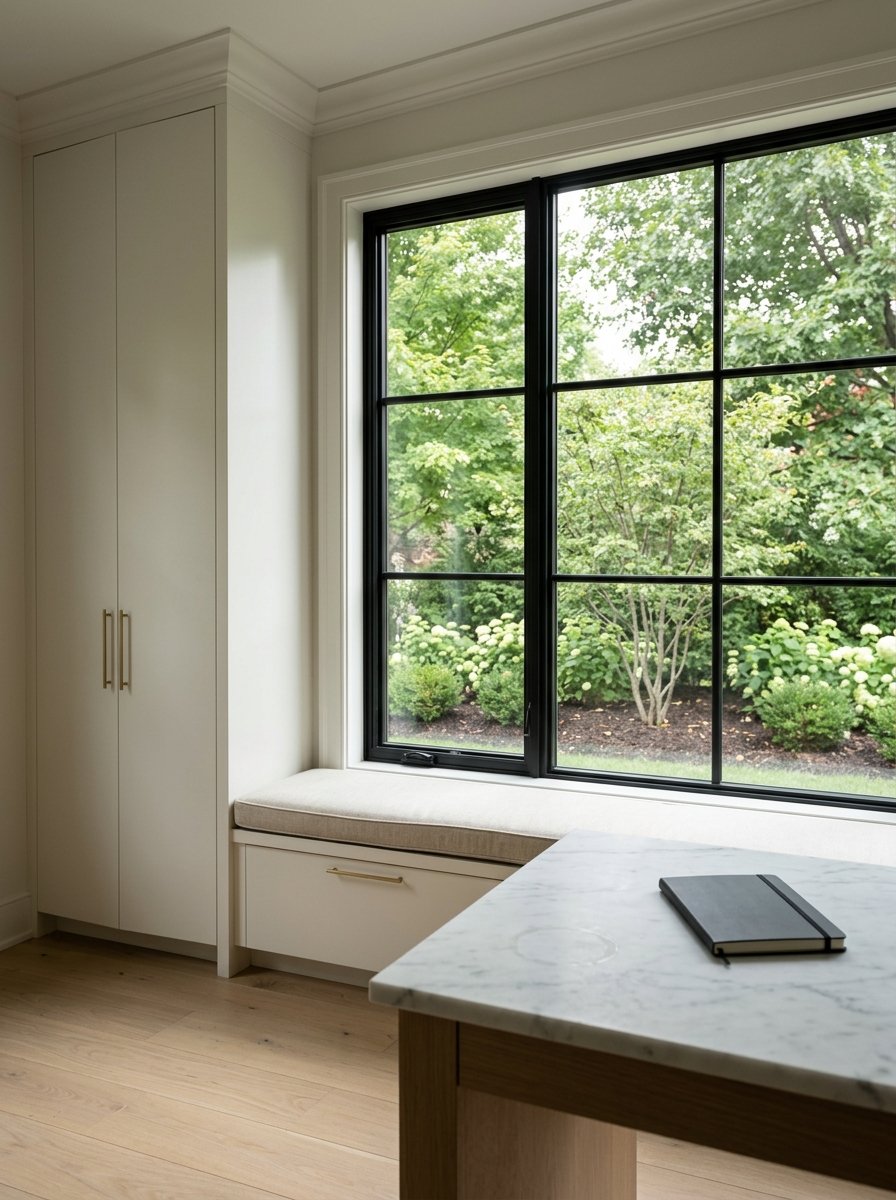
Buying a Home in Purchase: Balancing Space and Commute
June 18, 2026
June 18, 2026
If you are searching for more room without giving up access to New York City, Purchase is one of those places that quickly gets your attention. The appeal is easy to understand: larger lots, a quieter residential feel, and meaningful access to open space. At the same time, the commute is usually more layered than in a station-centered town. This guide will help you weigh that tradeoff with more clarity. Let’s dive in.
Purchase stands out because it is built around space. Harrison’s planning documents describe Purchase as primarily one-family residential, and they note that most of the zoned land in Purchase carries a 2-acre minimum lot size.
That matters because the setting shapes daily life. In many Westchester towns, buyers are comparing homes block by block. In Purchase, you are often comparing a different kind of lifestyle altogether, one where land, setbacks, and lower density are part of the value.
The town’s comprehensive plan identifies the lowest-density residential district as R-2.5, which has a 2.5-acre minimum lot size. It also notes that the R-2 district, with a 2-acre minimum, makes up most of the zoned land in Purchase.
For you as a buyer, that means space is not just an occasional feature. It is part of the local pattern. If you are looking for more privacy, more separation between homes, and a more estate-like setting, Purchase naturally supports that goal.
Purchase’s zoning rules go beyond simple lot size. For certain conservation-development lots, the code requires a 100-foot perimeter buffer, and when those boundaries touch Purchase Street or Anderson Hill Road, at least half of the setback area must remain natural or landscaped.
Cluster-development rules also focus on preserving open land, trees, natural topography, recreation areas, and environmentally sensitive land. In practical terms, that helps explain why Purchase often appeals to buyers who want a lower-density residential environment rather than a more compressed suburban layout.
When buyers say they want more space, they usually mean more than square footage. In Purchase, that can mean more yard, more privacy, and a greater sense of visual breathing room around the home.
It can also mean a quieter rhythm. Because the area is shaped by larger lots and land-preservation patterns, the experience is often less about being close to a downtown strip and more about enjoying the property itself and the surrounding landscape.
One of the strongest parts of the Purchase lifestyle is that the open feel does not stop at your driveway. Purchase College describes its campus as a 500-acre former estate, with more than 80 acres of wetland, more than 175 undeveloped acres, and about 100 acres maintained in a natural Forever Wild state.
The campus also includes running trails available to the campus community and the public. For buyers who value outdoor access, that adds another layer to the decision. You are not only buying a larger home site. You are also buying into an area where green space is part of the setting.
Westchester County Parks manages more than 18,000 acres across more than 50 facilities, including trailways and nature centers. That broader system matters when you are comparing Purchase with more built-up parts of the county.
If your ideal week includes time outdoors, Purchase can support that preference in a practical way. The appeal is not just what sits on your lot. It is also the surrounding access to natural space within the New York metro area.
The biggest tradeoff for many buyers is simple: Purchase offers space, but it is generally not a walk-to-train town. That does not make the commute impossible. It just means you should expect a few moving parts.
Purchase College’s travel information describes the area as easily accessible by car, with directions from the Hutchinson River Parkway, I-287, and I-684. For many residents, driving is part of the routine.
For travel from New York City, the Purchase College travel page directs riders to take Metro-North to White Plains and then use Bee-Line Bus No. 12 or a taxi to reach campus. It also notes that the New Haven Line to Rye is another option.
The same source says the No. 12 bus runs about every hour Monday through Saturday. That gives you a clear picture of the commute structure: workable, but often not as direct as towns built around a central station.
Harrison station on the New Haven Line has Bee-Line connections, accessible platform features, and ticket machines. White Plains station on the Harlem Line is a larger hub with Bee-Line, CTtransit, and Hudson Link connections, and the MTA describes it as a major bus-transfer point.
For you, this means station choice can shape the experience. Some buyers may prefer the flexibility of using a larger hub like White Plains. Others may decide they want a more direct, station-centered setup and look elsewhere.
Most Purchase buyers are balancing two priorities: how much they value land and privacy, and how simple they need the daily commute to be. There is no single right answer. The right fit depends on how you actually live.
If you only commute into Manhattan occasionally, or you have a hybrid schedule, Purchase may feel like a very reasonable trade. If you want the fastest possible path from front door to train platform every weekday, another town may feel more aligned.
Purchase may be a strong fit if you are looking for:
Another Westchester town may be a better fit if you prioritize:
The most useful way to evaluate Purchase is to test your own priorities honestly. A beautiful property can lose some shine if the commute feels harder than expected. On the other hand, a more layered commute may be worth it if the home and setting solve the lifestyle issues pushing you to move.
A few questions can help you decide more clearly.
If you are in the city five days a week, simplicity may carry more weight. If you commute two or three days a week, you may feel much more comfortable trading a direct station lifestyle for more land and privacy.
Think beyond the idea of a bigger yard. Ask whether having more room around you would improve your daily life in a real way. In Purchase, the combination of larger lots, preserved landscape features, and nearby green space is part of the value.
Some buyers want to walk to transit and build daily life around a central downtown rhythm. Purchase generally offers a different pattern. The focus is more residential, more spread out, and more centered on the home and surrounding landscape.
Before making an offer, it helps to test the commute in real life. Drive to the station you expect to use, check timing, and look at how a train-plus-bus or train-plus-taxi routine feels in practice. That kind of trial can make your decision much easier.
Purchase tends to work best for buyers who are intentionally choosing space first. The zoning pattern, lot sizes, buffering rules, and preserved open areas all point to a place where lower-density residential living is a core part of the appeal.
The commute to New York City is still feasible, but it is usually a multi-step process rather than a one-step, walkable station routine. If you know that going in, and the space is what you truly want, Purchase can be a very compelling choice.
If you are comparing Purchase with other Westchester options, a strategic side-by-side review can save you time and help you focus on the towns that best match your routine. For tailored guidance on space, commute, and property fit, schedule a consultation with The E & F Team - Main Site.
Stay up to date on the latest real estate trends.
Whether you’re buying, selling, investing, or simply exploring the market, having a trusted local team matters. The E&F Team provides strategic guidance and market expertise to support you every step of the way. Contact us to learn more about our services, request a home valuation, or gain insight into today’s market.
The E & F Team
Looking to buy, sell or learn more about the market? Reach out today to start a conversation.
Jessica Feuerstein
(301) 257-8624
[email protected]
Elina Edelman
(917) 364-6151
[email protected]